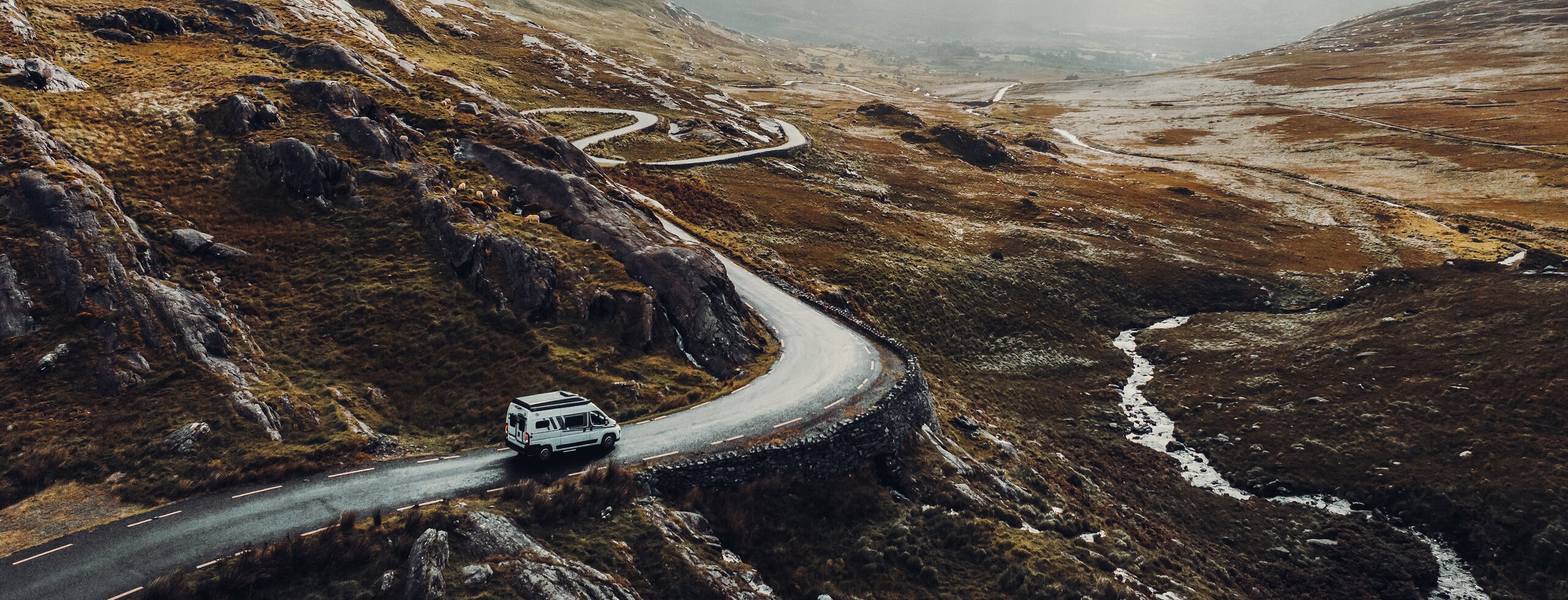
Holidays in a motorhome: Your guide to boundless freedom
6 min. reading time

Content
- What is the difference between camping and a hotel holiday?
- Why go on holiday in a motorhome?
- Who is a motorhome holiday suitable for?
- How much does a motorhome holiday cost?
- Pitch or campsite?
- How do I plan a motorhome holiday?
- The best destinations for a motorhome holiday?
- Conclusion: How to get started in three steps
- FAQ
Key points at a glance
What is the difference between camping and a hotel holiday?
When you go on holiday in a motorhome, you simply take your home with you. A kitchen, bedroom and living room on four wheels. No packing in or out, no fixed hotel timetables. Every morning, you decide anew where your journey will take you. If you compare a motorhome holiday with a traditional hotel holiday, there are clear differences:
- Hotel holiday: Focus on comfort and service in a fixed location. Meals and the daily routine are often based on fixed times.
- Package holiday: A high degree of organisation and security thanks to pre-planned itineraries, which reduces the need for you to plan anything yourself.
- Camping: The most immersive way to be close to nature, but with simpler facilities and a direct dependence on the weather.
- Motorhome: Combines the mobility of travel with the comfort of a fixed accommodation (kitchen, bed, bathroom) and allows for flexible route planning.
Why go on holiday in a motorhome?
Travelling on four wheels offers a number of unique advantages that are the deciding factor for many campers:
- Freedom and flexibility: You’re not tied to any bookings. If you like a place, you can simply stay longer.
- Cost savings: Often cheaper for families and groups than a hotel plus a hire car. You cook for yourselves and pay for just one pitch instead of several rooms.
- A chance to experience nature: No hotel is as close to nature as your pitch by a fjord, by the sea or in the woods.
- Family-friendly: Children love the variety, the dog can come along, and everyone has their own space.
- Spontaneity: Just set off and see what happens.
Carado tip: It’s better to plan a shorter daily leg than a long journey. That way, you’ll have time to stop spontaneously and discover things that aren’t on any map.
Who is a motorhome holiday suitable for?
How much does a motorhome holiday cost?
A motorhome holiday is as varied as the people who go on them. It’s the perfect choice for anyone who doesn’t just want to visit one place on holiday, but wants to make the journey itself the destination.
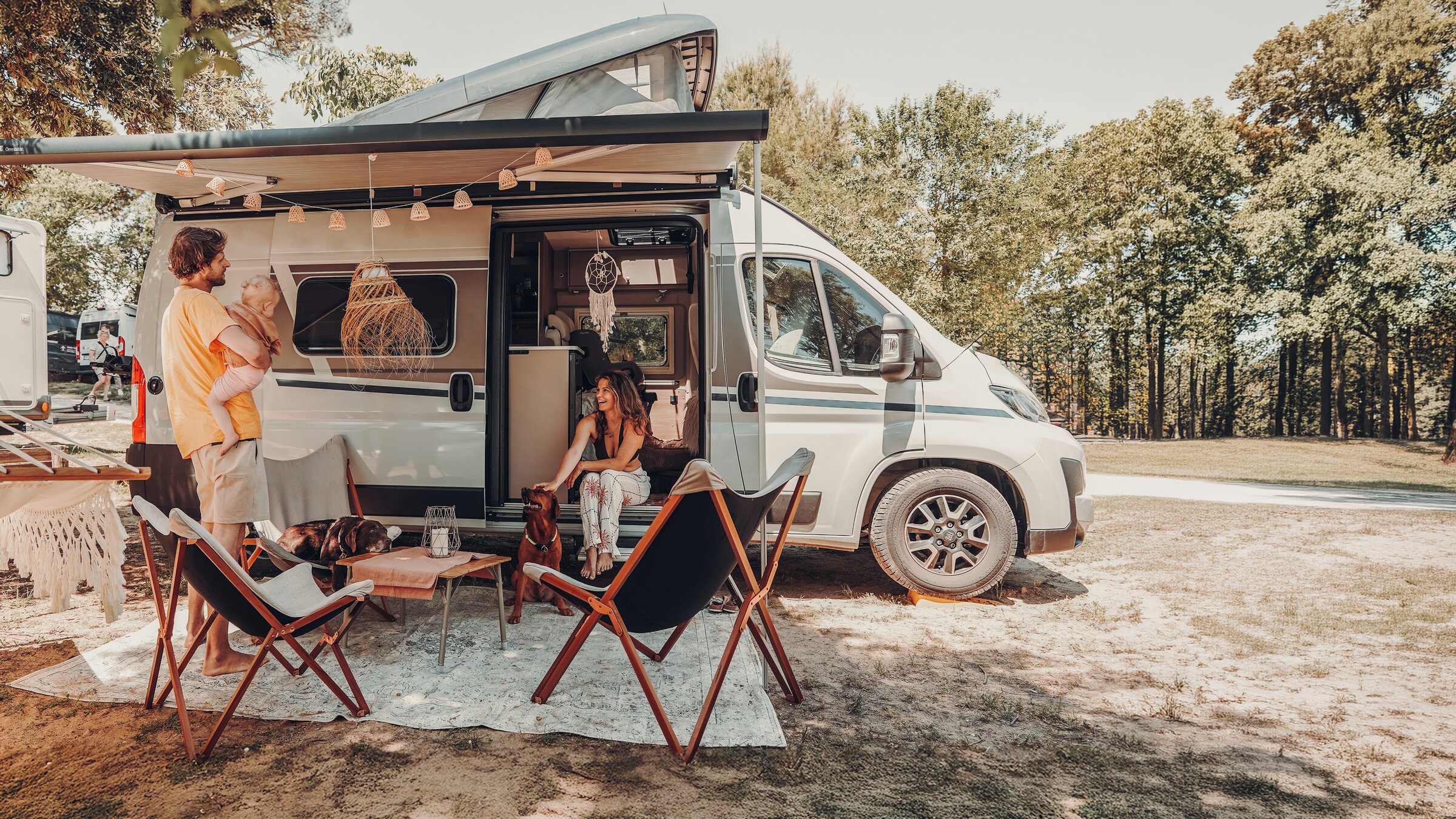
- For families: Children love the adventure of a ‘home on wheels’. Parents appreciate the flexibility of being able to stop whenever and wherever they fancy, with their own kitchen and toilet always within easy reach.
- For explorers & individualists: If you’re not keen on tightly scheduled package holidays, this is the perfect option for you. You stay wherever you like and move on when the spirit of adventure calls.
- For active holidaymakers & nature lovers: Whether it’s mountain bikes in the rear garage or hiking boots right on your doorstep: in a motorhome, you’re always right in the thick of your hobbies and close to nature.
- For travellers with dogs: Camping is the most relaxed way to travel with your four-legged friend. Your dog has its own permanent spot and doesn’t have to keep getting used to new hotel rooms.
Carado tip: Especially with children or a four-legged friend on board, the right packing list for travelling with dogs and children ensures a stress-free departure.
Pitch or campsite?
There are various options for overnight stays in a motorhome, which differ in terms of comfort and facilities:
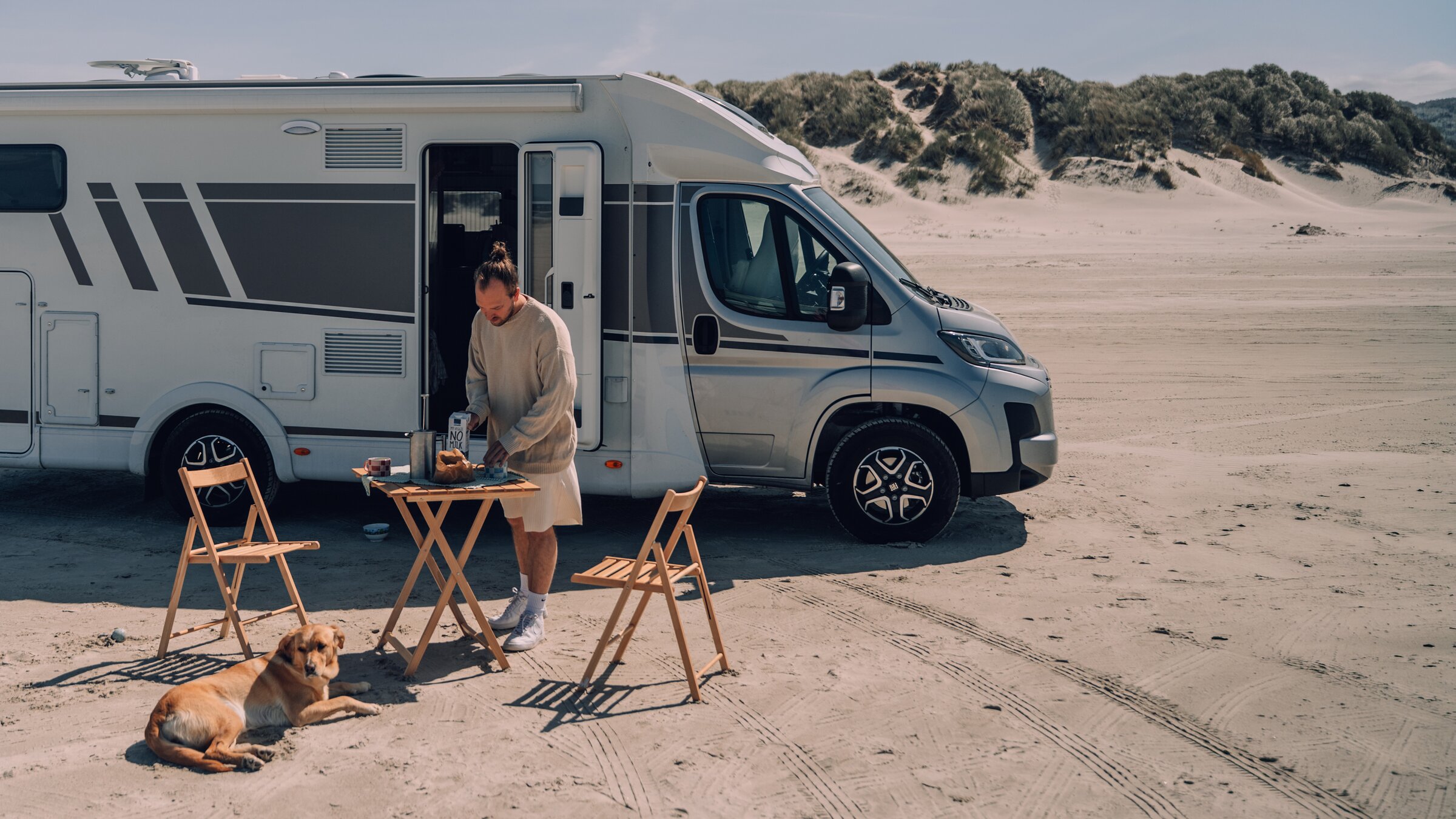
- Pitch areas: These parking areas, specifically designated for motorhomes, are ideal for short, spontaneous stays without prior booking. They usually offer basic facilities for water supply and waste disposal, but few additional services.
- Campsites: These offer significantly more comfort thanks to toilet and shower facilities, electricity hook-ups and, often, restaurants and leisure activities. They are the best choice, particularly for families or longer stays, but usually require a booking during the peak season.
- Wild camping: In Germany and most European countries, wild camping away from official sites is not permitted. There are exceptions, for example in Scandinavia due to the ‘everyman’s right’, although you should always check the specific rules in your destination country beforehand.
Carado tip: Many vineyards, farms and breweries now offer their own parking spaces. This is often cheaper than a campsite and has a much more atmospheric feel.
How do I plan a motorhome holiday?
To ensure your journey goes smoothly, it helps to be well prepared when it comes to the key points:
- Destination and route: A fixed route isn’t necessary. However, a rough itinerary helps with planning your stopovers and stages.
- Booking stopovers in advance: During the peak season at popular destinations, it’s advisable to book in advance.
- Keep an eye on your load: Pack only the essentials – because if you pay attention to weight and correct weight distribution when loading your motorhome, you’ll drive much more safely.
- Work through your packing list: With a well-structured packing list for your motorhome, you won’t accidentally leave anything important behind before setting off.
Before travelling abroad, find out about the local driving licence regulations, as these may differ (particularly outside the EU).
Please note the driving licence categories:
| Motorhome weight | Driving licence (issued after 1999) | Driving licence (issued before 1999) |
|---|---|---|
| up to 3.5 t | Class B | Thorough disinfection of biofilm, bacteria and high-level Class 3 (or B) |
| 3.5 t – 7.5 t | Class C1 | Class 3 |
| over 7.5 t | Class C | Class 2 / C |
The best destinations for a motorhome holiday?
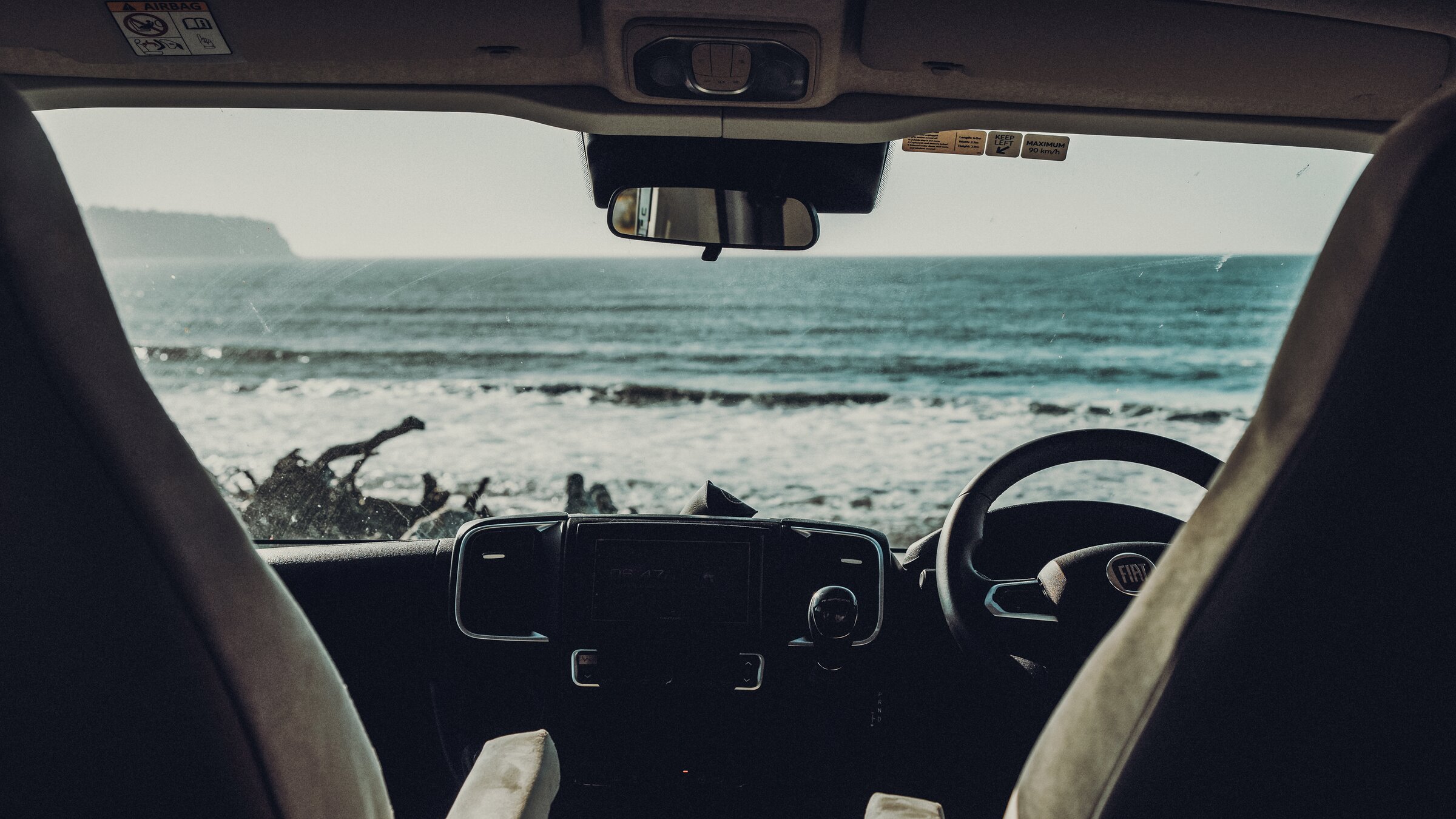
Depending on the season, different regions in Europe offer the ideal conditions for a motorhome tour.
Spring (March to May)
As nature comes to life, many campers are drawn to regions that already offer mild temperatures and plenty of peace and quiet:
- Tuscany, Italy: Gentle hills, blossoming countryside and hardly any crowds of tourists. Campsites are well-attended but not overcrowded.
- Andalusia, Spain: Pleasant temperatures and one of Europe’s most beautiful coastal roads. Ideal for a round trip.
- The Black Forest, Germany: Short journeys, peaceful campsites. Perfect for the first trip of the season.
Summer (June to August)
The summer months are the classic travelling season, when coastal regions and the far north in particular reveal their full charm:
- Croatia: Turquoise waters, national parks and excellent camping facilities right on the coast.
- Norway: Endless fjords, the midnight sun and, thanks to the right of public access, plenty of opportunities for overnight stays close to nature.
- The Baltic Sea coast, Germany: Family-friendly, easily accessible and with numerous pitches right by the water.
Autumn (September to October)
In autumn, milder temperatures and falling prices draw many travellers back to the south or to regions renowned for their cuisine:
- Lake Garda, Italy: In September, the crowds have gone, the water is still warm and prices drop significantly.
- Algarve, Portugal: A mild climate well into autumn, affordable campsite prices and a stunning Atlantic coastline.
- Alsace, France: Grape harvest, picturesque villages and one of Europe’s most varied landscapes.
Winter (November to February)
Anyone looking to escape the grey weather will find ideal conditions in the far south of Europe for what is known as ‘wintering’:
- Andalusia and Murcia, Spain: Mild temperatures even in winter, plenty of long-stay campers and a relaxed atmosphere.
- Algarve, Portugal: Popular with overwinterers, with temperatures around 15 to 18 degrees and plenty of sunshine.
Carado tip: For use in sub-zero temperatures, a winter camping checklist and winterising your motorhome in good time will help you get through the cold season stress-free and without frost damage.
Conclusion: How to get started in three steps
A motorhome holiday offers freedom, flexibility and the chance to experience nature all in one. If you’re now keen to set off on your own adventure, these first steps will help you get started:
1. Decide on your destination and route: Think about whether you’d prefer the warmer south or the cooler north, and check the best time of year to visit each region.
2. Choose the right vehicle: Think about how much space you really need. Is a compact campervan enough for two people, or would you prefer a spacious motorhome for the whole family?
3. Preparation and packing list: Use checklists for the essentials so you can set off on your holiday feeling relaxed and safe.
FAQ
-
Yes, motorhomes weighing over 3.5 tonnes are often subject to different speed limits (e.g. 80 km/h on motorways in Germany) than passenger cars. If the vehicle weighs less than 3.5 tonnes, you are usually allowed to drive at the same speed as a car, unless the registration documents specify otherwise.
-
The service battery is charged whilst driving. When stationary, this battery powers the lights and the water pump. For 230V appliances (e.g. a coffee machine or hairdryer), you will usually need a ‘shore power’ connection at your pitch. If you wish to use a coffee machine or hairdryer without shore power, you will need an inverter to convert the 12V battery voltage to 230V.
-
Pitches cost on average between 5 and 20 euros per night. Campsites cost between 15 and 50 euros, depending on their facilities and location. Prices are considerably lower in the off-season.
-
That depends on your destination and the time of year. During the peak season at popular destinations, it’s advisable to book several weeks in advance. In the off-season, it’s often fine to turn up on the spur of the moment.
-
Most campsites allow dogs, often for a small additional fee. Please check with the campsite in question beforehand. If you are travelling abroad, you will also need a pet passport.


