
Sometimes things need to be done quickly – for example, when an unexpected drop in temperature is imminent. This compact procedure protects the most important systems until you can complete the full winterisation checklist.
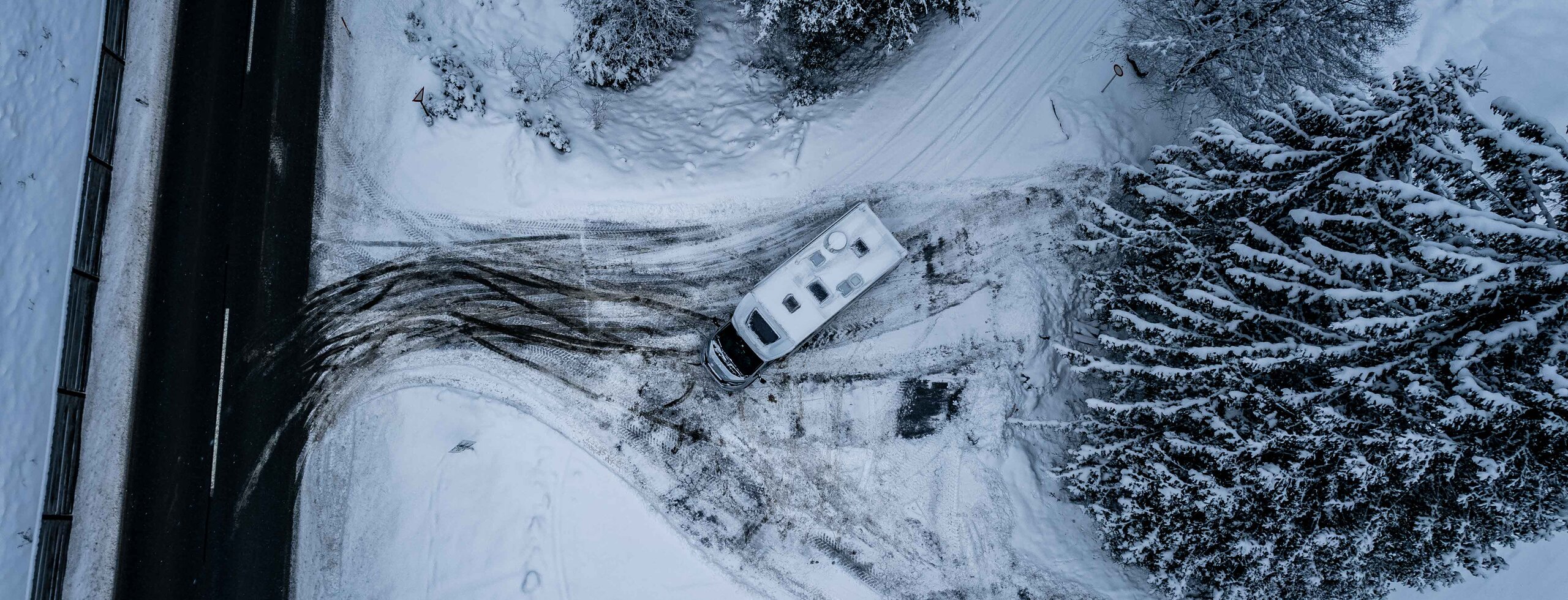
Winterising Your Motorhome – Complete Guide & Checklist
7 min. reading time
How to keep your vehicle protected: A clear guide to draining, cleaning, care and frost protection – ideal for the winter break. Download the checklist easily as a PDF.
The most important information at a glance
- Completely drain the water system
- Close the gas bottle and check the shut-off valves
- Clean the exterior and protect the bodywork
- Disconnect the battery or regularly discharge it
- Clean, ventilate, and dry the interior
- Prepare and ventilate the storage place
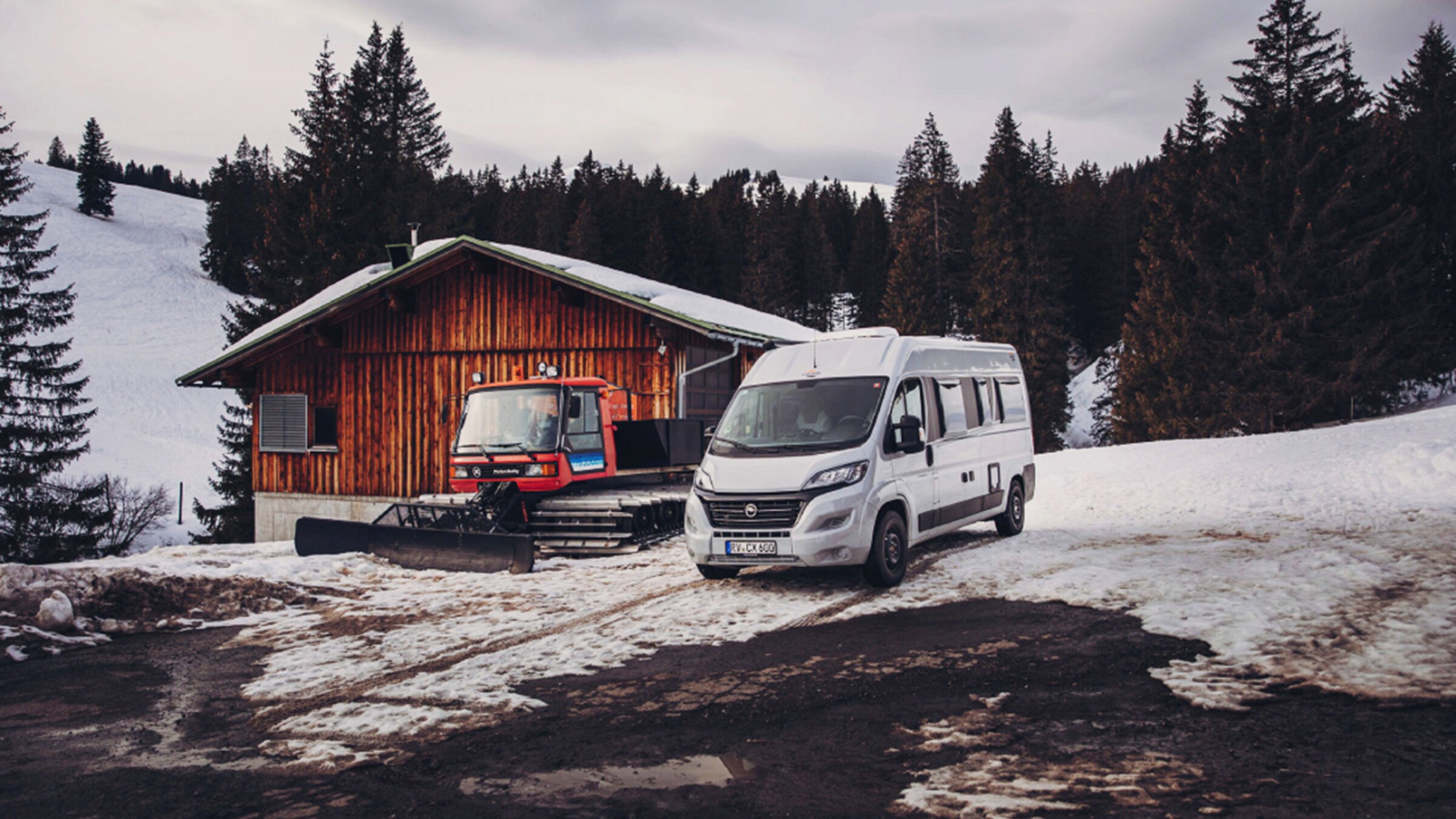
Quick Check: Winterize in 15 minutes
-
Roughly empty the water system
Open all taps. Drain tanks and pipes and switch on the pump briefly until no more water comes out.
-
Secure gas
Close the gas cylinders and shut off the shut-off valves in the gas locker.
-
Disconnect the battery
Disconnect the negative terminal of the body battery. This will prevent unwanted discharges.
-
Secure the interior
Remove food, open cupboard doors slightly and check the ventilation slots to allow moisture to escape.
-
Cover the vehicle and ventilate it.
Use a breathable cover and ensure air circulation. This helps prevent the formation of condensation.
-
Check windows and roof vents.
Make sure all windows and roof vents are completely closed. Even small gaps can quickly lead to drafts or moisture inside.
Winterfest vs. wintertauglich: Die wichtigsten Unterschiede
-
What does "winterizing" mean?
Winterizing means preparing the vehicle for periods of inactivity in low temperatures.
The goal is to prevent frost damage to water pipes, tanks, and fixtures. At the same time, it minimizes the risk of moisture, mold formation, and battery drain. All areas that carry water or are sensitive to cold are affected: tanks, plumbing, electrical systems, gas, and the interior. By proceeding carefully, you can maintain the vehicle’s functionality for many years. -
What does "winter-ready" mean?
Winter-ready refers to the structural features of a motorhome that make it suitable for travel in low temperatures.
This includes high-quality insulation, well-protected pipes, heated tanks, and a stable construction technique. These features ensure that the vehicle remains comfortably usable even in freezing temperatures and that the key systems work reliably. However, being winter-ready is not a substitute for winterizing: it supports operation on the road but does not automatically protect the vehicle when it stands still for a long time. Therefore, it is important to clearly distinguish between the structural features and the necessary preparation steps.
Winterizing Checklist for Your Carado Motorhome
-
- Drain Fresh Water and Wastewater Tanks
Open all drain valves completely. Let the tanks and pipes run empty. Even a few milliliters of residual water can damage pipes when frozen. - Blow Out Pipes and Shower Hoses
Open all water taps one by one. If available, use a pressure pump to blow out the remaining water. Remove the shower head and wipe off any moisture. - Boiler / Truma FrostControl
Make sure the FrostControl valve is open. Only then can the boiler be completely drained. A closed valve protector can lead to damage. - Clean Siphons and Toilet Cassette
Completely empty the cassette. Clean the siphons thoroughly and let them dry. This prevents odors and mold.
- Drain Fresh Water and Wastewater Tanks
-
-
Starter Battery
Fully charge the battery. Many campers charge it once a month to prevent deep discharge. -
Living Area Battery
Disconnect the negative terminal or use an appropriate charger. Regular maintenance charging keeps the battery stable. -
Maintenance Charging & Chargers
Ensure that the charger is suitable for winter operation. A constant, low charging voltage protects the battery. -
Solar System in Winter Mode
Check the system for snow or ice buildup. Remove any loose snow layers and inspect cables and connections for moisture.
-
-
-
Gas Bottles & Shut-off Valves
Close all valves. Remove dirt and check the rubber seals of the connections for cracks. -
Frost Protection Automatic
Many heating systems automatically open a frost valve when it's cold. Check if this function has already been triggered. -
Check Heating System (Gas/Diesel)
Let the system run for a few minutes. Pay attention to any unusual sounds or smells – a short functionality test is sufficient.
-
-
-
Cleaning & Food Removal
Remove crumbs, food scraps, and open packaging. This helps avoid odors and moisture. -
Cushions, Mattresses, Textiles
Store cushions slightly raised. Many campers leave mattresses slightly elevated to allow air circulation. -
Mold / Moisture Protection
Use a dehumidifier if necessary. Slightly open cupboard doors and ensure regular air circulation.
-
-
-
Roof, Seals, Paint
Clean the roof surfaces and check seals for visible damage. A clean surface makes the spring inspection easier. -
Undercarriage
Rinse off dirt and road salt. This helps keep the undercarriage protected for longer. -
Tires & Tire Pressure
Slightly increase the tire pressure and occasionally move the vehicle to prevent flat spots.
Flat spots are permanent flattenings of the tires that occur when a vehicle stands in the same position for an extended period and the weight rests on the same point. -
Cover & Protective Cover
Choose breathable materials. Avoid using plastic sheets that trap moisture.
-
-
-
Hall, Garage or Outdoor Space
A covered space protects against snow and rain. A dry outdoor space is also suitable if sufficient air circulation is possible. -
Ground, Chocks, Air Circulation
Use chocks to relieve pressure on the tires. Allow fresh air into the interior without leaving the vehicle unsecured. -
Security & Theft Protection
Secure doors and storage compartments. Document accessories. If accessories are stolen or damaged, documentation is important for insurance purposes. A simple list (preferably with photos) makes it easier to report damage, prove ownership, and assess value in case of an incident.A suitable parking space also increases protection against theft.
-
Please note: This guide provides general advice on preparing your motorhome for winter. Depending on the model, equipment, and technical systems, individual steps may vary. Always check the instructions in the operating manuals of your vehicle and the built-in devices.
Practical Tips for the Winter Parking Spot
A good parking spot protects your motorhome from moisture, frost, and unnecessary strain.
Many damages do not result from extreme temperatures but from moisture or long periods of inactivity. With these tips, your vehicle will stay reliably protected during the winter months.
- Choosing the right parking spot
Choose a spot that is dry, level, and easily accessible. An ideal location is a hall or carport, as it protects your motorhome from snow, rain, and strong UV rays. If only an outdoor spot is available, ensure a solid surface and enough distance from trees to prevent damage from falling branches or snow. A slight breeze at the parking spot also prevents water buildup. - Protect the vehicle – Cover & ground surface
Use a breathable cover that allows moisture to escape but protects against rain. Avoid parking the vehicle directly on damp ground. A simple but effective solution is placing a narrow sidewalk tile under each tire – this keeps the contact with the ground dry and level. - Moisture control
In winter, warm indoor air quickly meets cold surfaces. Dehumidifiers help keep the interior dry. Use them sparingly to avoid excessive dryness, which can damage materials such as seals, cushions, and wood surfaces over time, making them brittle. Open cupboard doors slightly and leave cushions slightly raised – this allows better air circulation. - Regular winter checks
Check the motorhome every two to three weeks. Monitor the battery voltage, remove snow from the roof, and inspect visible seals. Occasionally move the vehicle a few centimeters to prevent flat spots from developing.
Live hack from practice: Air circulation with a simple method
Place two small wooden slats under the mattress or the foot of the cushions. This creates a slight incline and promotes air movement – no additional tools needed. This small measure reliably prevents damp spots on mattresses, especially during long winter stays.
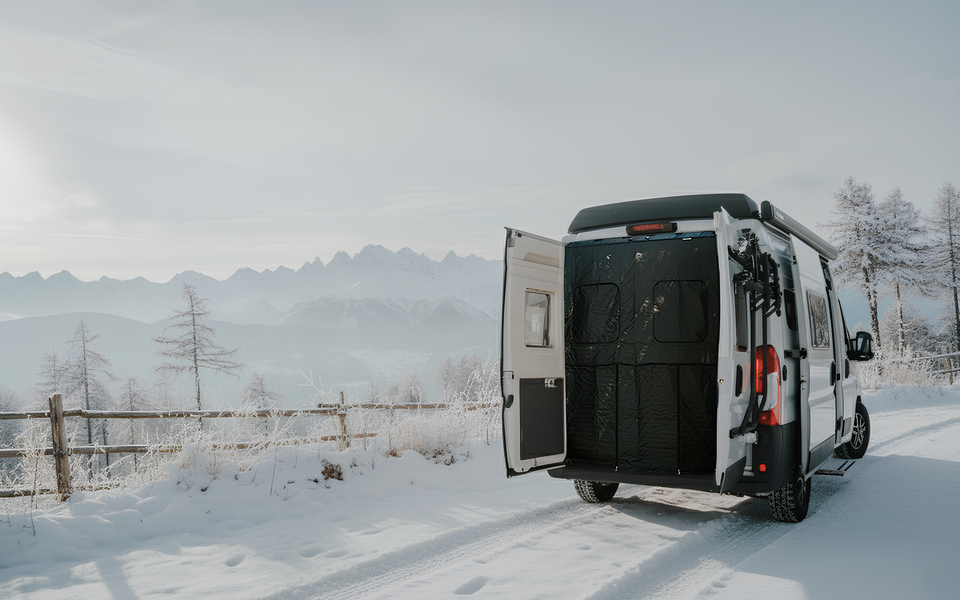
Technology and Equipment for Winter Camping
For trips in low temperatures, the right equipment plays a significant role. Key factors include good insulation, heated tanks, and a stable construction to keep heat inside the vehicle and protect sensitive areas. The technical systems also support winter operation: heating systems, frost protection mechanisms, and proper air circulation ensure that pipes and interiors remain stable. It is important to regularly check these systems and have them serviced when necessary.
Common Mistakes When Winterizing Your Motorhome
-
Water system not completely drained
Even a small amount of residual water can damage pipes.
-
Underrating battery maintenance.
A battery that is constantly deep-discharged quickly loses capacity.
-
Incorrect vehicle covering.
Non-breathable covers trap moisture and promote mold growth.
-
Unsuitable parking spot
Soft ground or tight parking spots make maintenance, inspection, and air circulation difficult.
-
Interior too damp / poorly cleaned
Regular air circulation prevents mold formation, musty odors, and residues caused by insufficient cleaning.
Frequently Asked Questions about Winterizing Your Motorhome
-
The correct draining of the water system is the most important protection against frost damage. Freezing water expands and can cause tanks, boilers, and fixtures to burst, resulting in high repair costs. Start by opening the drain valves of the fresh water and gray water tanks and draining all the water. The drain valve of the hot water boiler must also be opened – make sure the heater and water pump are turned off. To remove any remaining water from the pipes, open all taps (kitchen, bathroom, shower) and leave them in the middle position (or at least open both hot and cold). This relieves the mixers and prevents any remaining water from staying in the fixtures. Finally, briefly turn on the water pump until it runs dry to remove any last water from the system.
-
The ideal time to winterize the motorhome is as soon as nighttime temperatures consistently fall below 5°C. The critical threshold is the freezing point of water, 0°C. Since the pipes in a stationary vehicle, especially in uninsulated areas like the double floor or along the exterior walls, cool down quickly, you should not wait until the first severe frost hits. If a longer period of inactivity (several weeks) is expected, it is advisable to carry out these protective measures preemptively during milder temperatures, in order to be prepared for unexpected early cold spells.
-
Follow the step-by-step guide in this article – from draining the water system to choosing the right parking spot.
-
-
Winterized describes the active preparation of the vehicle for a cold period of inactivity – such as draining the water system, disconnecting the batteries, and checking for moisture. These measures must be taken for any motorhome that will not be used in winter.
-
Winter-ready describes the technical construction of the vehicle that allows for comfortable and safe living in it even in temperatures below freezing. This includes a powerful heating system, excellent insulation, ideally a heated double floor, and heated, insulated water tanks.
-
-
-
Insulation mats for the cab: These are stretched over the windows from the outside. They effectively reduce heat loss through the large glass surfaces and prevent condensation from forming in the cab.
-
Moisture absorbers/dehumidifiers: Granular or salt dehumidifiers help absorb the natural residual moisture in the closed interior, thus protecting against mold and mildew stains.
-
Breathable winter cover: To protect against snow, ice, and dirt. It is essential to choose a breathable cover to ensure air circulation and avoid the formation of stagnant moisture and mold under the cover.
-
Smart maintenance charger: A charger that can remain permanently connected to keep the vehicle's batteries optimally charged over several months without overcharging or damaging them.
-


